


 Back
On 25 September 2026, as part of the European Researchers’ Night, the Latvian partners of the LACISE project invite everyone interested to explore the fascinating world of science! Visitors will have the opportunity to take part in experiments, demonstrations, and interactive activities, offering a closer look at future energy solutions, hydrogen technologies, smart energy systems, and the principles behind battery operation.
Visitors will have the opportunity to explore cutting-edge developments in hydrogen technologies, battery technologies, smart energy systems, and artificial intelligence. A wide range of engaging demonstrations, experiments, and hands-on activities for all ages will be available at Riga Technical University, the Institute of Electronics and Computer Science, and the Institute of Solid State Physics, University of Latvia.
The programme includes demonstrations of hydrogen production technologies, spectacular experiments with hydrogen bubbles, battery-building workshops, and opportunities to analyse the composition of jewellery using advanced scientific instruments. Visitors can also explore the potential of drones and remote sensing technologies, take guided tours of energy research laboratories, and learn how artificial intelligence helps forecast solar energy generation. Interactive quizzes and games will give participants the chance to test their knowledge and win LACISE souvenirs and prizes.
About the programme
These activities are organised within the framework of the Swiss-Latvian Cooperation Programme “Partnership in Applied Research: Innovative Materials, ICT and Smart Energy”, which promotes collaboration between Latvian and Swiss research institutions while supporting the practical application of research results. The initiative aims to inspire public interest in science and highlight its role in building a more sustainable and innovative future.
Read more

The development of industry-based vocational education will be strengthened with the support of the Swiss-Latvia cooperation program
The first international cooperation agreement has been signed between the State Education Development Agency (VIAA) and the “Hotel & Gastro Formation Schweiz”, a leading Swiss Hotel and Catering Industry Training Centre within the framework of the programme “Stronger Work-Based Learning for Improving Vocational Education and Training in Latvia (VET)” (Swiss-Latvia Cooperation Programme). This cooperation marks […]
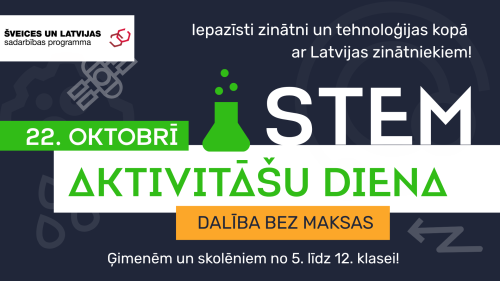
STEM Activity day at the Space exploration centre in Cēsis
On 22 October, from 10:00 to 18:00, a free STEM Activity day will take place at the Space Exploration centre in Cēsis, where Latvian scientists will invite families and school students to explore science and technology and discover how they are applied in practice. Visitors will have the opportunity to take part in […]
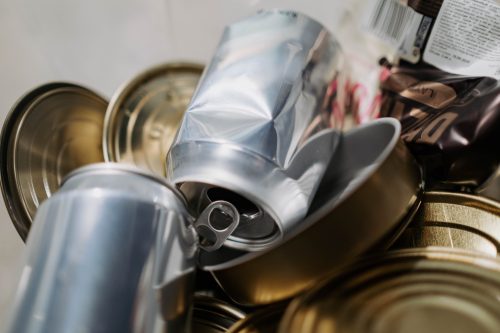
Vai no vecas skārdenes var iegūt elektrību? Latvijā pēta ūdeņraža ieguvi no alumīnija atkritumiem
Cīņā par saudzīgāku planētas resursu izmantošanu ūdeņradis arvien biežāk tiek vērtēts kā viens no nākotnes enerģijas nesējiem. Viens no iespējamiem tā ieguves avotiem? ir alumīnija atkritumi. No viena kilograma tīra alumīnija teorētiski var iegūt tik daudz ūdeņraža, lai ar to pietiktu pilnībā uzlādēt aptuveni 30 vidējas jaudas klēpjdatoru. Par to, vai šī tehnoloģija nākotnē patiešām […]


