 Back
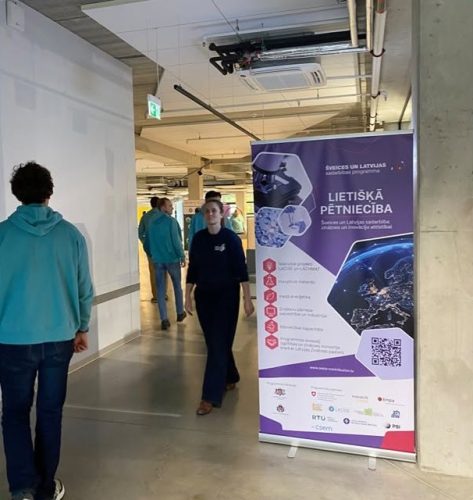
On 22 October, the Cēsis Space Education Centre transformed into a place where science became not only visible, but also tangible. During the STEM Activity Day, organised by the Latvian partners of the LACISE project, school students, families, and other visitors had the opportunity to meet researchers, ask questions, take part in hands-on experiments, and discover how scientific ideas are transformed into technologies that shape our everyday lives.
The event brought science closer to the public by offering engaging activities and direct interaction with researchers, inspiring curiosity and encouraging young people to explore future opportunities in STEM fields.
Bringing science closer to society
Throughout the day, visitors had the opportunity to explore energy technologies, sensor systems, materials science, and Earth observation solutions. The focus, however, was not on theory alone. Nearly every activity encouraged participants to engage directly with scientific concepts through hands-on experiments, interactive demonstrations, and knowledge-testing challenges.
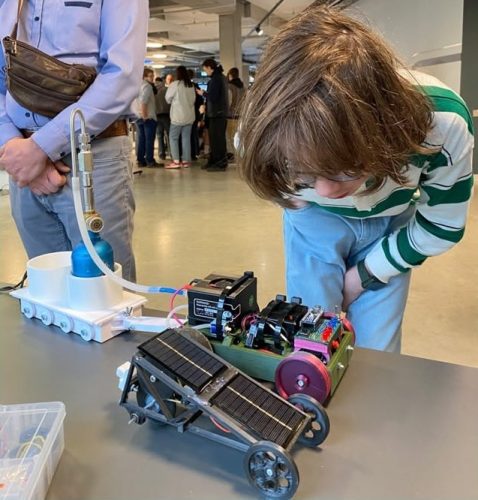
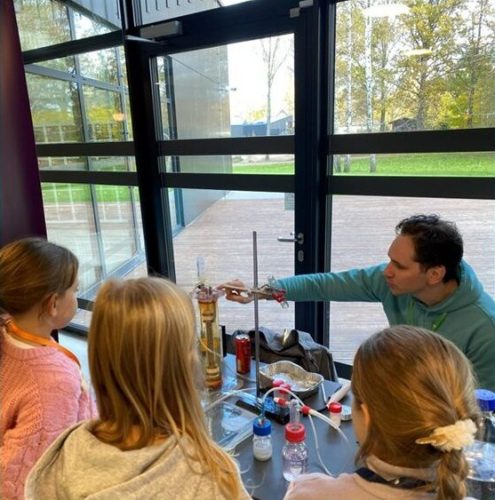
Particular interest was generated by activities showcasing future energy solutions. In the demonstration “The Magic of Hydrogen,” researchers presented a range of hydrogen-based reactions and explained why this element is considered one of the most promising pathways towards sustainable energy. Meanwhile, a hydrogen-powered model car demonstrated how a fuel cell converts chemical energy into electricity, offering a practical example of a technology that is already being used in zero-emission transportation today.
From materials science to artificial intelligence
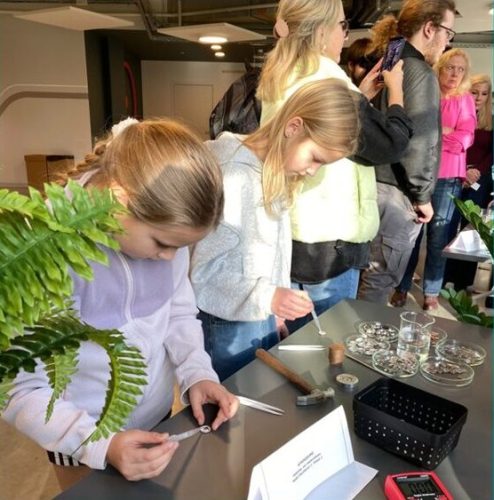
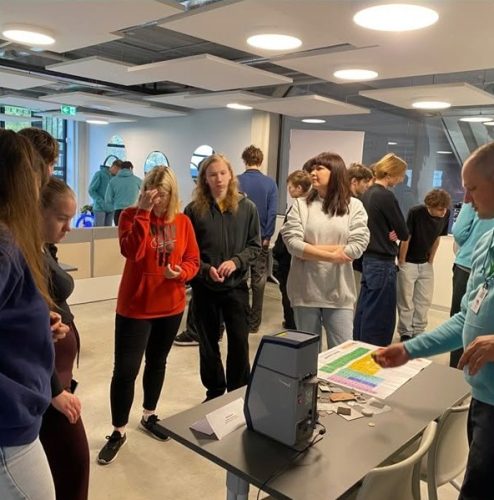
Activities in the fields of materials science and sensor technologies were equally engaging. At the Riga Technical University stand, titled “Not Everything That Glitters Is Gold,” visitors had the opportunity to explore an X-ray fluorescence (XRF) analyser and discover the chemical composition of various objects. Meanwhile, the demonstration “Artificial Nose” showcased an FTIR gas analyser, illustrating how modern sensor technologies can detect substances in the air and identify their properties.
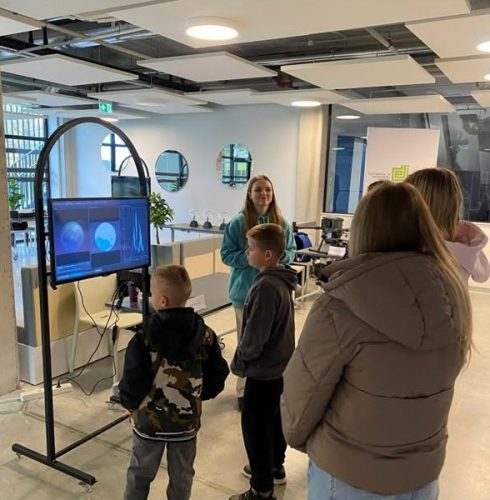
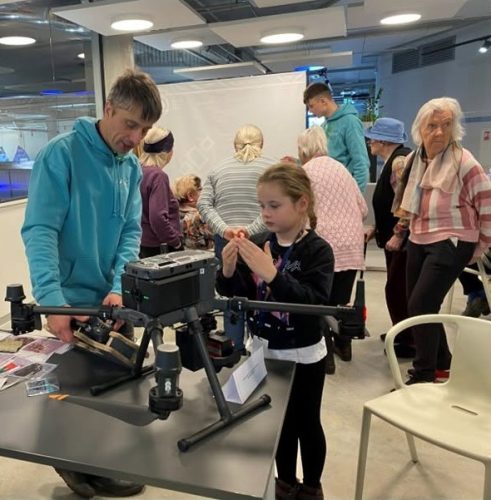
Researchers from the Institute of Electronics and Computer Science introduced visitors to the fascinating world of Earth observation technologies. In the activity “What Does a Drone See?”, participants learned how hyperspectral cameras are used to analyse environmental conditions and how different objects can be identified across multiple light spectra. Another demonstration introduced fish-eye sky cameras, cloud segmentation techniques, and solar energy forecasting, highlighting how artificial intelligence and image analysis can support more efficient use of renewable energy resources.
Science has no age limit
Particularly heartening was the visit of a group of seniors from the nearby Cīrulīši retirement home. Although the event was primarily designed for school students and families, the seniors showed a keen interest in the activities, listening attentively to researchers’ presentations, observing demonstrations, and engaging in discussions about modern technologies.
Their participation served as a reminder that curiosity and a desire to learn have no age limits. The encounter fostered meaningful intergenerational dialogue and highlighted the broader societal relevance of scientific research, demonstrating that innovation and discovery can inspire people at every stage of life.
Inspiring the next generation of researchers
Throughout the event, researchers not only demonstrated technologies but also shared their personal experiences, offering insights into laboratory work and the everyday life of a scientist. It is often these informal conversations that inspire young people, helping them see science not as something distant or abstract, but as a real and achievable career path.
The impact of events like this extends far beyond a single day or demonstration. Every question asked, every experiment conducted, and every conversation between a researcher and a visitor has the potential to spark an interest in science, strengthen public trust in research, and inspire the innovators of tomorrow.
The LACISE team would like to thank all visitors for their interest, curiosity, and active participation, as well as the Cēsis Space Education Centre for its valuable cooperation and for providing the opportunity to jointly promote STEM fields in Latvia. Through initiatives like this, science becomes more accessible, engaging, and relevant to society as a whole.
About the programme
The Swiss-Latvian Cooperation Programme “Applied Research” is part of Switzerland’s contribution to reducing economic and social disparities within the European Union through strengthened bilateral cooperation between Switzerland, partner countries, and the European Union.
The programme supports the advancement of science and innovation in Latvia by funding research and development projects in the fields of smart materials, information technologies, and smart energy systems. It is implemented by the Ministry of Education and Science of Latvia in cooperation with the Latvian Council of Science.
The STEM Activity Day was organised by researchers from the Institute of Solid State Physics, University of Latvia, Riga Technical University, and the Institute of Electronics and Computer Science within the framework of the Swiss-Latvian Cooperation Programme “Applied Research” project LACISE.
The project aims to strengthen scientific collaboration between Latvia and Switzerland and to develop innovative solutions in the areas of smart materials, digital technologies, and sustainable energy. Equally important is its contribution to promoting public understanding of science, encouraging interest in STEM fields, and demonstrating how research and innovation contribute to addressing societal challenges and shaping future technologies.
Read more