 Back
How to effectively reuse recycled asphalt in road construction, how to make construction more environmentally friendly using 3D printing and locally sourced materials, and what concrete spraying is – at the «Climate Days 2026» festival, students explore what advanced smart concrete and asphalt materials and technologies scientists are developing and how students can also get involved in the research.
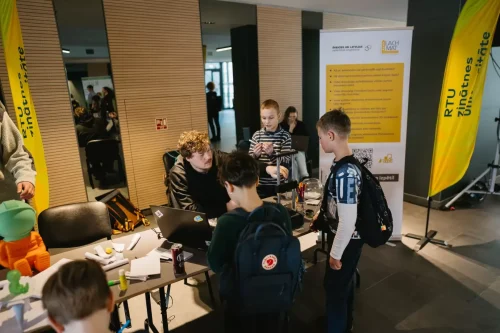
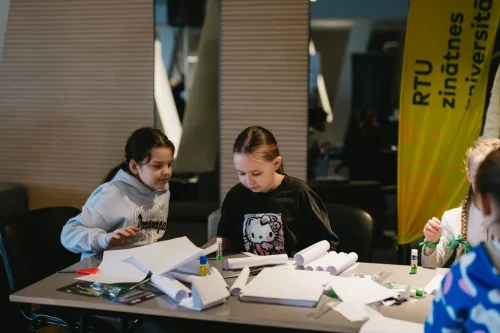
At the LACHMAT booth – part of the Swiss-Latvian cooperation program «Applied Research» – students were able to learn about the research and development process for road construction and building materials through engaging and entertaining activities, including seeing what smart roads – equipped with sensor technologies – might look like in the future. Many children and young people took the opportunity to try their hand at being road engineers for the first time by designing and building paper bridges.
Students and teachers, as well as other interested parties, could also learn more about the LACHMAT project, including the opportunity to gain early research experience by participating in the study of materials and technologies that could genuinely be used in the future for the construction of roads, various structures, and buildings. Specifically, to foster children’s and young people’s interest in STEAM, high school students and students at vocational education institutions can receive a scholarship to develop a scientific research project or module. By 2029, a total of 16 high school students and vocational students will be able to gain early research experience in the field of advanced materials through the project.More information.
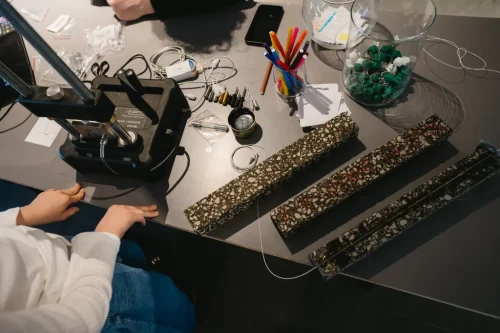
In this project, RTU researchers, in close collaboration with Empa, the Swiss Federal Laboratories for Materials Science and Technology, are developing, refining, and bringing to market technologies for the reuse of road pavement and the incorporation of bio-based additives in asphalt production, making the road construction industry more environmentally friendly, as well as for the development of high-performance spray-applied concrete, which will extend the service life of bridges and reduce the need for reconstruction. Development of sensor technology embedded in road pavements is also continuing, so that data can be used to monitor changes in pavement condition and road traffic, as well as to facilitate the adaptation of roads to climate change. To promote the sustainability of 3D-printed concrete, scientists are developing concrete mixtures using locally sourced minerals. More information.
The «Climate Days 2026» festival at the RTU student campus in Ķīpsala brought together Riga students from grades 1 through 12, inspiring and motivating them to adopt more climate-friendly behaviors in their daily lives. The festival also served as the finale of the «Climate Days in Schools» competition, where the jury and interested parties could assess the energy and environmental literacy of students and educational institutions. This school year, the competition highlighted significant climate-related challenges by focusing on two main themes: waste reduction and promoting energy efficiency in educational institutions. In the competition’s two rounds, students were invited to explore how changing daily habits, responsible resource use, and creative solutions can help reduce the school’s environmental impact while strengthening knowledge and skills in sustainable development.
The competition was organized for the second year in a row by RTU, the Riga City Council, and the Riga Energy Agency. The main partner of the festival was the Latvian environmental services company AS «CleanR Grupa» with support provided by AS «Latvijas Finieris» and the association «Latvijas koks».