With support from Switzerland, Children’s Hospital doctors have further developed their knowledge of paediatric cancer diagnostics and long-term care this autumn. By taking part in major international conferences and working group meetings across Europe, doctors and laboratory specialists have gained insights into the latest approaches to diagnosing childhood cancer, providing personalised treatment and ensuring long-term health monitoring for patients. The experience gained will help improve diagnostic and treatment processes and further develop patient-centred care at the Children’s Hospital.
The opportunity to participate in international training and exchange visits was provided through the Swiss–Latvian Cooperation Programme project “Advancement of Paediatric Cancer Care at the Children’s Clinical University Hospital”.
In October, an international meeting and training sessions on the ALLTogether treatment protocol for paediatric acute lymphoblastic leukaemia (the most common type of childhood blood cancer) took place in Nice, France. The Children’s Hospital was represented by paediatric haemato-oncologist Anna Valaine, paediatrician and Senior Physician at the Department of Haemato-Oncology Santa Kursīte, and laboratory physician Alma Strupule.
During the training, leading specialists learned about the latest results and diagnostic approaches developed by the international working group, which can help them make increasingly precise decisions about patient treatment. One example is the assessment of minimal residual disease (MRD).
“Modern laboratory testing methods make it possible to detect even very small numbers of leukaemia cells that remain in the body after treatment. This allows us to assess treatment effectiveness more accurately and helps us determine the most appropriate approach to further treatment,” explains Anna Valaine, paediatric haemato-oncologist.
The specialists also expanded their knowledge of personalised treatment options and the use of modern medicines. They learned about the latest findings on drug efficacy and safety, as well as the role of genetic testing in tailoring treatment to individual patients. The meeting also provided an opportunity to discuss the earlier use of innovative therapies to ensure the most effective possible treatment for children with leukaemia.
“This experience is valuable both for us as specialists, as it helps us identify the tasks ahead and the additional tests we need to introduce, and for our patients, as it will help us provide them with the best possible healthcare,” says Santa Kursīte, Senior Physician at the Children’s Hospital Department of Haemato-Oncology.
The knowledge and insights gained during the meeting and training sessions are expected to be applied in everyday clinical practice. For example, the Children’s Hospital plans to involve a laboratory flow cytometry specialist more actively in multidisciplinary clinical meetings and in the assessment of laboratory test results. The hospital also plans to review the approach to certain diagnostic tests and continue preparations for the development of its biobank and participation in future international research projects.
In September, paediatric haemato-oncologist Elizabete Cebura represented the Children’s Hospital at the PanCare European paediatric cancer network conference in Basel, Switzerland. PanCare brings together healthcare professionals, people who have survived cancer in childhood and their families across Europe to improve the quality of life and care of childhood cancer survivors and increase knowledge about late effects of cancer treatment. Specialists emphasise that monitoring a patient’s health during adolescence and adulthood is just as important as the treatment itself. This includes the timely detection of possible complications, rehabilitation and psychological support.
This year, the conference focused on issues related to sexuality and body image. Several research studies were also presented. Participants learned about the experience of different centres in organising late effects clinics, providing rehabilitation services, implementing projects and developing databases.
The knowledge gained at the conference and the experience shared by international experts will help the Children’s Hospital develop a structured long-term follow-up programme and improve individual care plans for children who have completed cancer treatment. The aim of such programmes is not only to identify possible late effects at an early stage, but also to help patients maintain the best possible health and quality of life in the long term.
This autumn, with support from the Swiss-funded programme, Children’s Hospital specialists also further developed their knowledge in other areas of paediatric oncology, including laboratory development, the diagnosis of less common tumours and support for families. For example, they gained further experience in diagnosing paediatric kidney tumours and neuroblastoma, as well as deepening their knowledge of psychological support and communication with patients’ families.
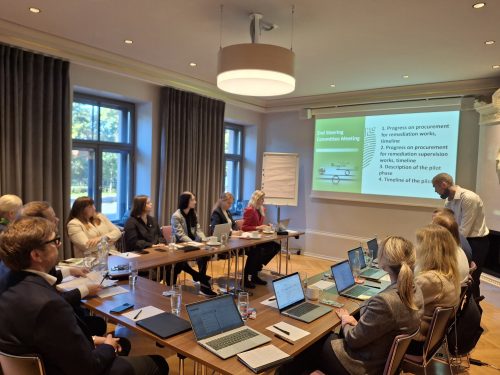
Meanwhile, Dr Martin Zoche, Head of Molecular Tumour Profiling at the Institute of Pathology and Molecular Pathology at University Hospital Zurich, returned to the Children’s Hospital for a follow-up visit. During his visit, he met with specialists from the Children’s Hospital’s pathology, molecular diagnostics and biobank teams to discuss opportunities to introduce new diagnostic methods, improve laboratory workflows and develop the biobank. Particular attention was also paid to the future development of the laboratories and biobank in connection with the establishment of the Children’s Hospital’s new Healthcare Advancement Center.
This international cooperation under the Swiss–Latvian Cooperation Programme helps strengthen the expertise of Children’s Hospital specialists and expand the hospital’s capabilities in advanced diagnostics and biobanking, supporting the development of precision medicine in paediatric oncology and rare diseases.
The programme “Advancement of Paediatric Cancer Care in Latvia” is implemented with financial support from Switzerland. Its aim is to improve diagnostics, treatment and quality of life for children with cancer and rare diseases, and to ensure continuous, patient-centred care.



 Back