



 Back
Read more

With support from Switzerland, RTU master’s students can take part in a major construction‑innovation project competition
Starting in September, the Institute of Civil Engineering at Riga Technical University will offer students funded positions for developing their master’s thesis, along with the opportunity to spend three months conducting research at the Swiss Federal Laboratories for Materials Science and Technology (Empa) in Switzerland. These master’s positions are announced within the Swiss-Latvian cooperation programme […]
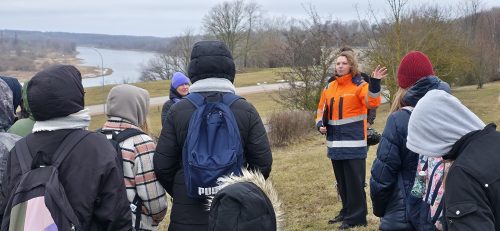
The expedition “Groundwater – Invisible or Visible?” promotes youth understanding of environmental protection
On Monday, March 3, an educational expedition for youth, titled “Groundwater – Invisible or Visible?”, took place in Aizkraukle. This was the first such expedition organised by the Ministry of Climate and Energy. The participating students expanded their knowledge on environmental protection issues by visiting a historically polluted site in Aizkraukle. Totally thirty students from […]

Swiss–Latvian Digital Centre launched in Riga to boost innovation in the energy sector
Swiss–Latvian Digital Centre launched in Riga to boost innovation in the energy sector On May 15, the Swiss–Latvian Smart Energy Digital Centre was officially launched in Riga as part of the international conference Deep Tech Atelier 2026. The centre has been established within the framework of the LACISE project, led by the Institute of Solid […]


