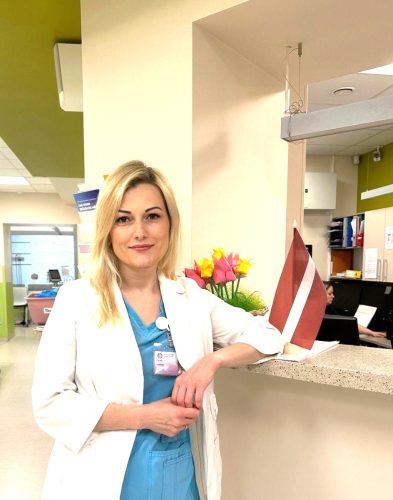
Technology is an essential part of a modern university hospital laboratory. While advanced equipment, computers and automated processes form the backbone of laboratory operations, it is the expertise of specialists that ensures quality assessment and professional interpretation, enabling accurate diagnosis in children. To mark European Laboratory Day (EuLabDay), Children’s Clinical University Hospital highlights the role of its laboratory and every member of its team in providing modern, precise paediatric diagnostics that meet international standards.
The Children’s Hospital laboratory is the only specialised tertiary-level paediatric laboratory in Latvia accredited in accordance with the LVS EN ISO 15189 standard. It provides a wide range of tests in clinical laboratory medicine, microbiology, genetics and histology, delivering critical information every day to support the initiation and monitoring of treatment for children. More than one million tests are carried out in the laboratory each year.
Laboratory medicine is an essential part of paediatric healthcare. Although the daily work of laboratory specialists often goes unseen by patients, their knowledge, care and precision make an important contribution to every child’s journey towards better health. Their work helps doctors make informed decisions, establish diagnoses in a timely manner and provide appropriate treatment. An estimated 60–70% of clinical decisions are linked to laboratory test results.
“Behind every laboratory result is a person whose knowledge, experience and professionalism are just as important as modern technology. More than 120 people work in the Children’s Hospital laboratory, analysing and interpreting test results. Every result requires careful analysis and interpretation to provide doctors and patients with clinically meaningful information,” says Dagne Grāvele, Head of the Administrative Unit of the Children’s Hospital laboratory.
Medicine is developing rapidly, and laboratory diagnostics are advancing alongside it. The Children’s Hospital is continuously investing in its laboratory infrastructure, introducing new testing methods and developing digital solutions to obtain increasingly precise and detailed information about children’s health.
“The Children’s Hospital laboratory is also actively involved in scientific research. Introducing new diagnostic methods, cooperating with international partners and participating in research projects help ensure that the latest advances in medicine become available to the hospital’s patients,” says Dmitrijs Rots, geneticist at the Children’s Hospital.
International cooperation projects are making an important contribution to the development of the laboratory. These include the Swiss–Latvian Cooperation Programme project “Advancement of Paediatric Cancer Care at the Children’s Clinical University Hospital”, which provides for significant investment in the development of the Children’s Hospital laboratory, helping to improve diagnostic opportunities in Latvia for patients with cancer and rare diseases.
As part of the project, work has begun on the digitalisation of haematology and histology testing. These solutions will not only help speed up diagnosis for patients with cancer and rare diseases, but will also enable Children’s Hospital specialists to consult remotely with leading experts across Europe without having to physically send samples abroad. The introduction of new technologies will make it possible to establish diagnoses more quickly and accurately, particularly in complex cases where every day and every piece of information can be crucial to a child’s treatment.
Meanwhile, specialists in genetics are actively involved in the work of the Centre for Precision Medicine in Paediatrics, which aims to develop an innovative, data-driven approach to paediatric healthcare. By bringing together laboratory expertise, clinical experience and research, the Centre is helping to lay the foundations for increasingly precise diagnostics and more personalised treatment.
The Children’s Hospital laboratory regularly demonstrates the quality of its work by participating in international external quality assessment programmes, including those organised by Finland’s Labquality and Germany’s DGKL. It also works closely with the Latvian Association of Laboratory Medicine (LLMB), which is a full member of the European Federation of Clinical Chemistry and Laboratory Medicine (EFLM).



 Back