



 Back
Qualified specialists and professional skills that meet labour market needs are essential for the development of Latvia’s energy sector. Practical vocational education and training, lifelong learning, technical expertise, and closer cooperation between educational institutions and industry companies are therefore becoming increasingly important.
Two recent developments in the energy sector highlight progress in these areas. On October 9, Riga State Technical School (RVT) opened a new practical training facility for its Energy Department, providing students with greater opportunities to develop practical skills and prepare for careers in the sector. Meanwhile, on October 1, AS “Sadales tīkls” launched its Energy Competence and Innovation Centre (EKIC), bringing together expertise in training, metrology, technical assessment, and innovation development.
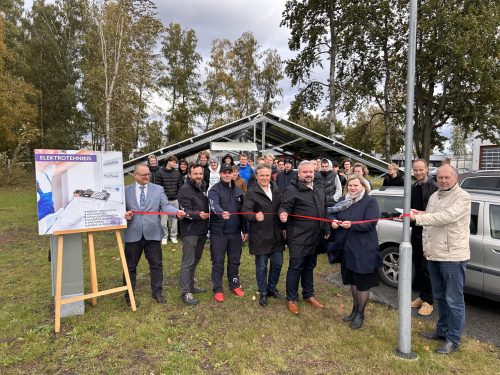
The new training facility at RVT strengthens vocational education infrastructure by enabling future specialists to consolidate their theoretical knowledge and develop practical skills in conditions that closely resemble real working environments. EKIC, meanwhile, offers professional training and skills development for energy sector specialists, metrology and laboratory services, technical expertise and testing, while also supporting the development of new solutions, pilot projects, and cooperation with industry partners.
Both initiatives reflect complementary priorities for the development of the energy sector: preparing the next generation of specialists and enhancing the professional competence of the existing workforce. They also demonstrate the important role that industry companies play in supporting education and professional development.
Cooperation between industry companies, vocational education institutions, and professional associations helps identify the skills required by the labour market and develop training opportunities that respond to industry needs. This approach is also supported in Latvia through the Swiss–Latvian Cooperation Programme, which promotes the development of new models for implementing and assessing industry-based vocational education, including strengthening work-based learning. The Latvian Association of Power Engineers and Energy Constructors (LEEA) is also involved as a partner in the Programme’s activities in the energy sector.
Read more


